
2026 · Structural Equation Modeling: A Multidisciplinary Journal
Author’s introduction (LinkedIn)
Journal DOI: 10.1080/10705511.2026.2674637 Open access
Abstract
Conditional mediation (CoMe) analysis integrates mediation and moderation to examine how an indirect effect transmitted through a mediator varies across levels of a moderator. In this tutorial, we show how to conduct CoMe analysis in generalized structured component analysis (GSCA), a component-based structural equation modeling approach. We first outline the technical foundations of GSCA-based CoMe analysis and then report a simulation study evaluating its performance relative to partial least squares path modeling, another component-based approach. We also present an empirical illustration that provides step-by-step guidance for implementing GSCA-based CoMe analysis using GSCA Pro, a free, user-friendly software package.
Version of record (author-provided PDF) · Abstract source · Author-authorized abstract
Figures 5 images
Select an image to view it at full size. Captions identify the source and version.
Figure 1
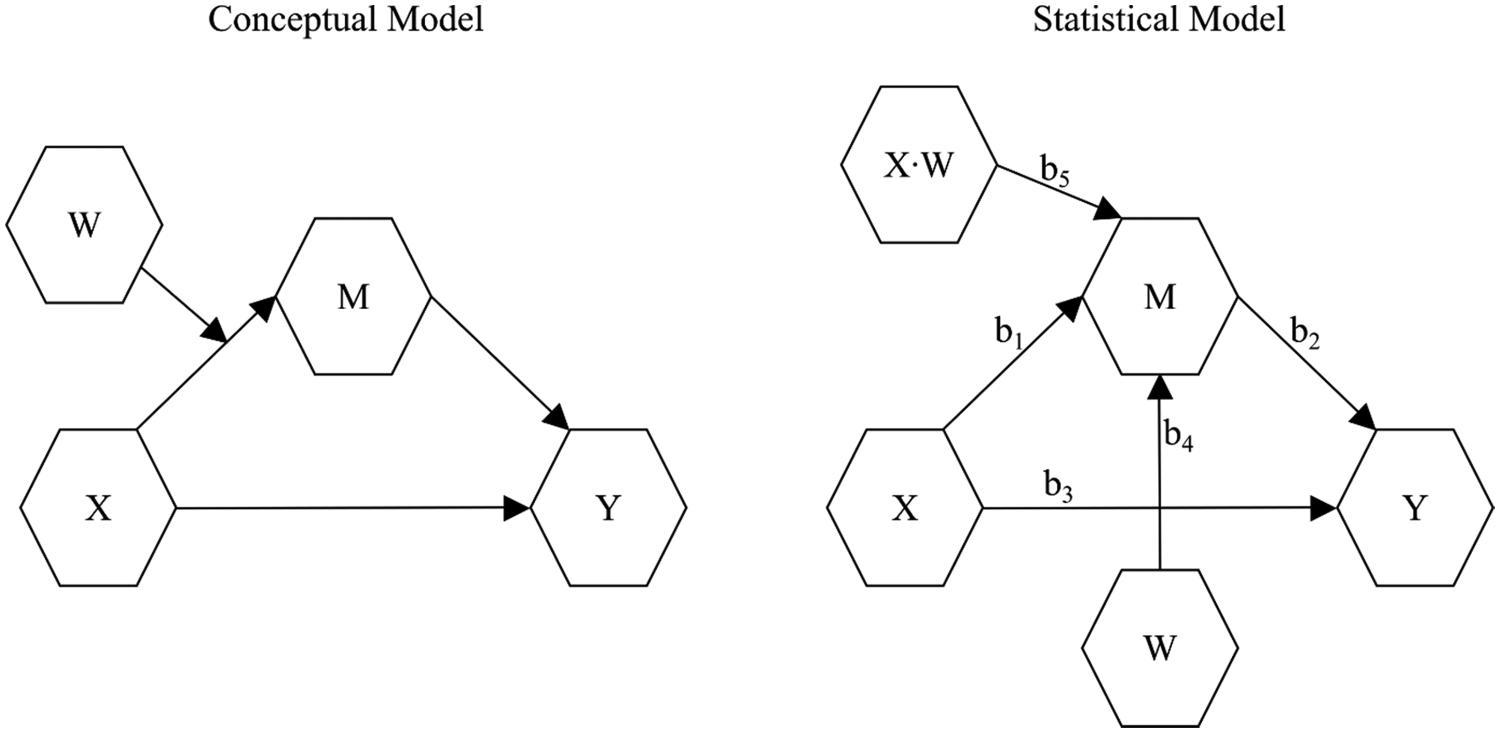
Caption & source
Conceptual and statistical specifications of CoMe Model A.
Version of record (author-provided PDF; author-uploaded ResearchGate copy) · Figure source · Author-authorized reproduction; no open license asserted
Baek, Cho, and Hwang (2026), Figure 1. Copyright 2026 Taylor & Francis Group, LLC. Reproduced from the author-provided version of record at the author's request.
Figure 2
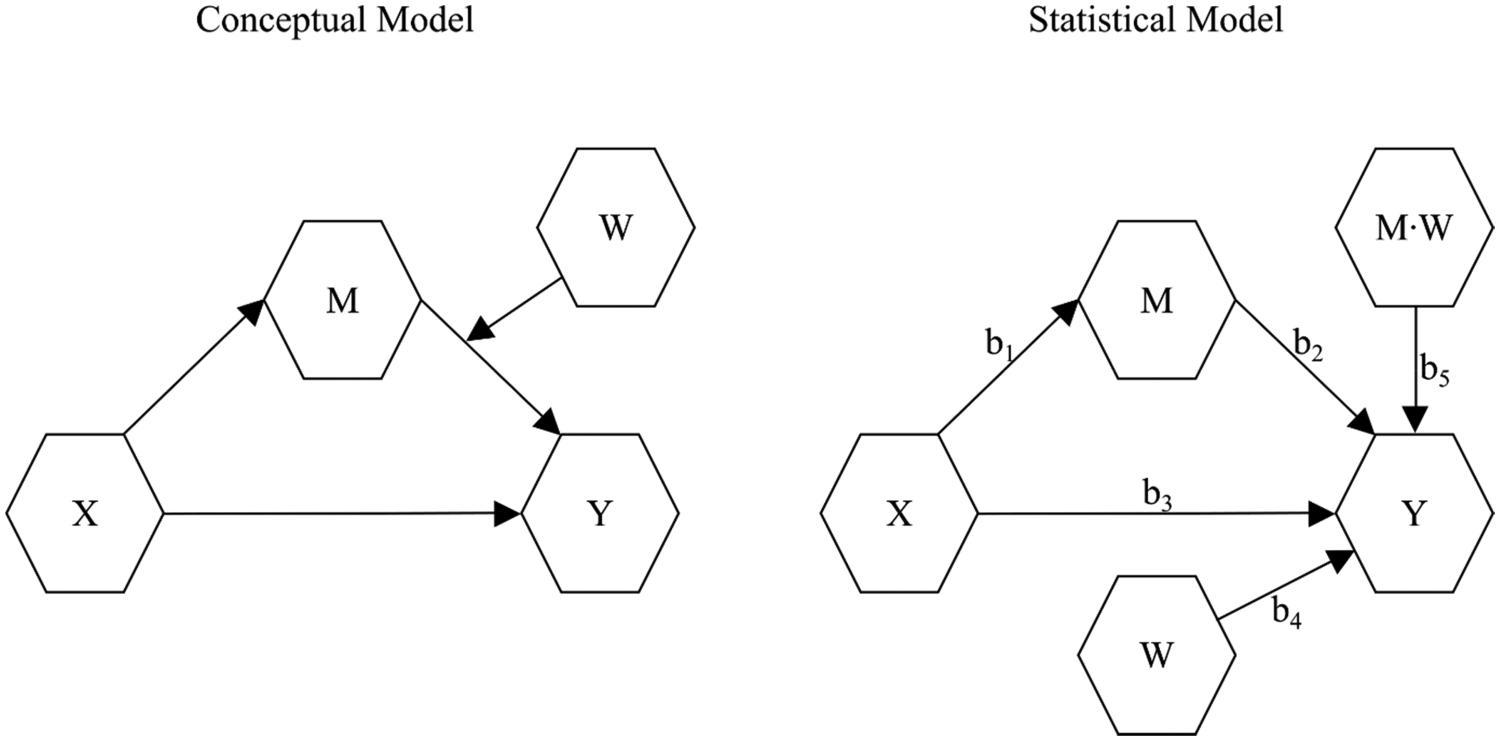
Caption & source
Conceptual and statistical specifications of CoMe Model B.
Version of record (author-provided PDF; author-uploaded ResearchGate copy) · Figure source · Author-authorized reproduction; no open license asserted
Baek, Cho, and Hwang (2026), Figure 2. Copyright 2026 Taylor & Francis Group, LLC. Reproduced from the author-provided version of record at the author's request.
Figure 3
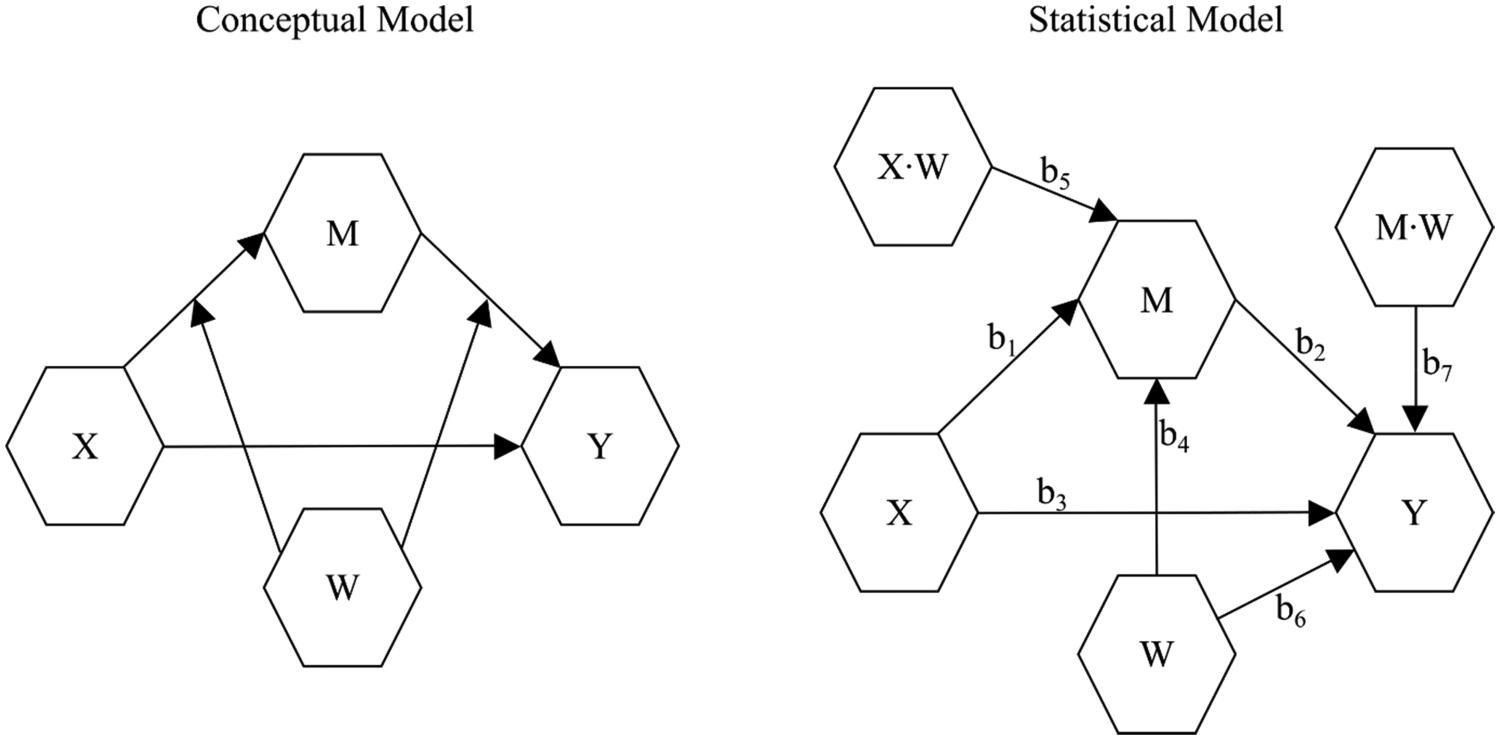
Caption & source
Conceptual and statistical specifications of CoMe Model C.
Version of record (author-provided PDF; author-uploaded ResearchGate copy) · Figure source · Author-authorized reproduction; no open license asserted
Baek, Cho, and Hwang (2026), Figure 3. Copyright 2026 Taylor & Francis Group, LLC. Reproduced from the author-provided version of record at the author's request.
Figure 4
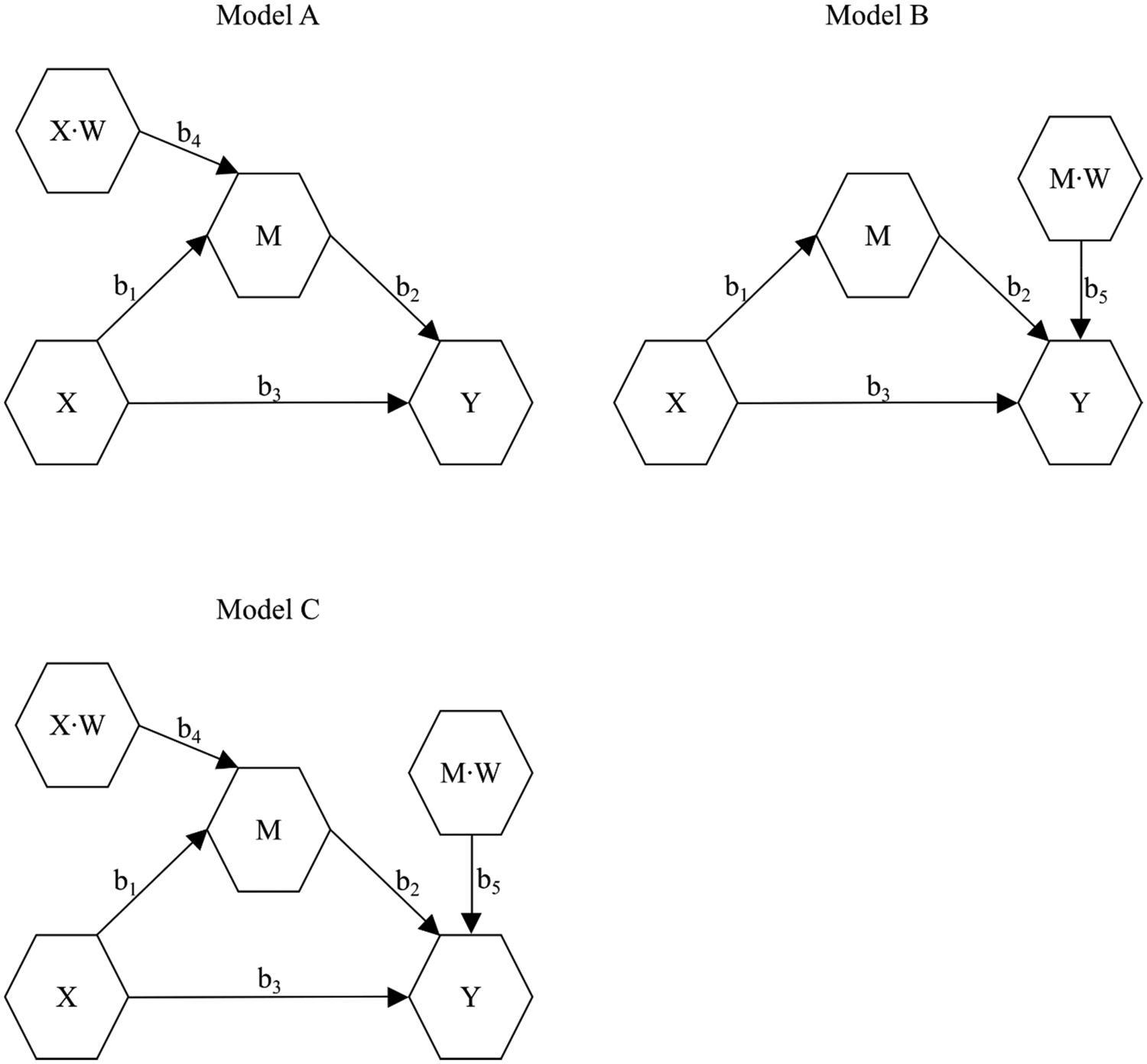
Caption & source
Three CoMe models specified for the simulation study.
Version of record (author-provided PDF; author-uploaded ResearchGate copy) · Figure source · Author-authorized reproduction; no open license asserted
Baek, Cho, and Hwang (2026), Figure 4. Copyright 2026 Taylor & Francis Group, LLC. Reproduced from the author-provided version of record at the author's request.
Figure 5
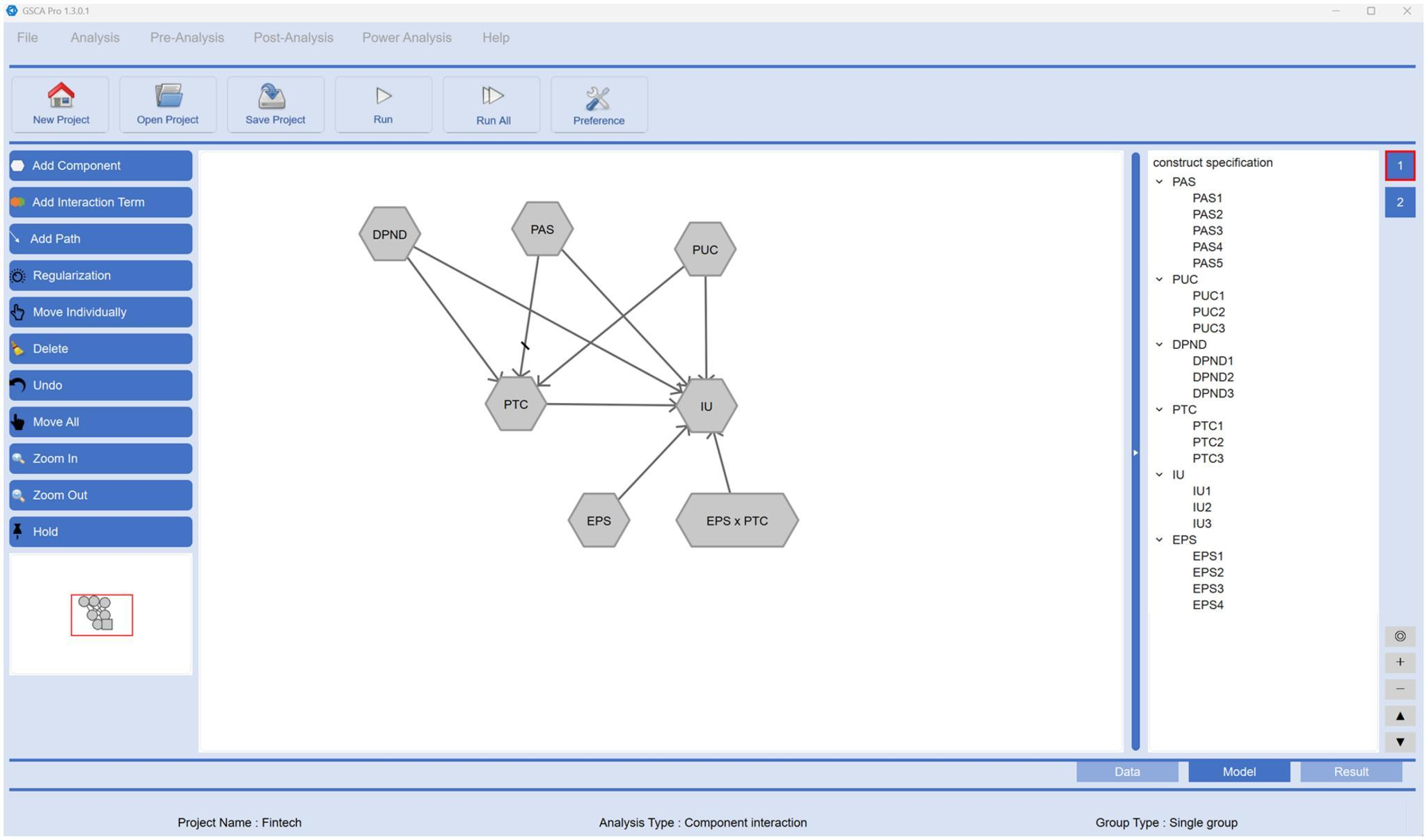
Caption & source
Specification of the example CoMe model in GSCA Pro.
Version of record (author-provided PDF; author-uploaded ResearchGate copy) · Figure source · Author-authorized reproduction; no open license asserted
Baek, Cho, and Hwang (2026), Figure 5. Copyright 2026 Taylor & Francis Group, LLC. Reproduced from the author-provided version of record at the author's request.
Versions & resources
Peer-reviewed journal article
Structural Equation Modeling: A Multidisciplinary Journal · 2026
DOI: 10.1080/10705511.2026.2674637Cite this work
In-Hyun Baek, Gyeongcheol Cho, & Heungsun Hwang (2026). A practical guide to conditional mediation analysis with GSCA: Method, simulation, and software. Structural Equation Modeling: A Multidisciplinary Journal. https://doi.org/10.1080/10705511.2026.2674637