
2024 · eLife · 12, RP88117
Journal DOI: 10.7554/eLife.88117 Open access
Preprint DOI: 10.7554/eLife.88117.2
Preprint DOI: 10.7554/eLife.88117.3
Abstract
In children, psychotic-like experiences (PLEs) are related to risk of psychosis, schizophrenia, and other mental disorders. Maladaptive cognitive functioning, influenced by genetic and environmental factors, is hypothesized to mediate the relationship between these factors and childhood PLEs. Using large-scale longitudinal data, we tested the relationships of genetic and environmental factors (such as familial and neighborhood environment) with cognitive intelligence and their relationships with current and future PLEs in children. We leveraged large-scale multimodal data of 6,602 children from the Adolescent Brain and Cognitive Development Study. Linear mixed model and a novel structural equation modeling (SEM) method that allows estimation of both components and factors were used to estimate the joint effects of cognitive phenotypes polygenic scores (PGSs), familial and neighborhood socioeconomic status (SES), and supportive environment on NIH Toolbox cognitive intelligence and PLEs. We adjusted for ethnicity (genetically defined), schizophrenia PGS, and additionally unobserved confounders (using computational confound modeling). Our findings indicate that lower cognitive intelligence and higher PLEs are significantly associated with lower PGSs for cognitive phenotypes, lower familial SES, lower neighborhood SES, and less supportive environments. Specifically, cognitive intelligence mediates the effects of these factors on PLEs, with supportive parenting and positive school environments showing the strongest impact on reducing PLEs. This study underscores the influence of genetic and environmental factors on PLEs through their effects on cognitive intelligence. Our findings have policy implications in that improving school and family environments and promoting local economic development may enhance cognitive and mental health in children.
Version of record · Abstract source · CC BY 4.0
Figures 4 images
Select an image to view it at full size. Captions identify the source and version.
Figure 1
Caption & source
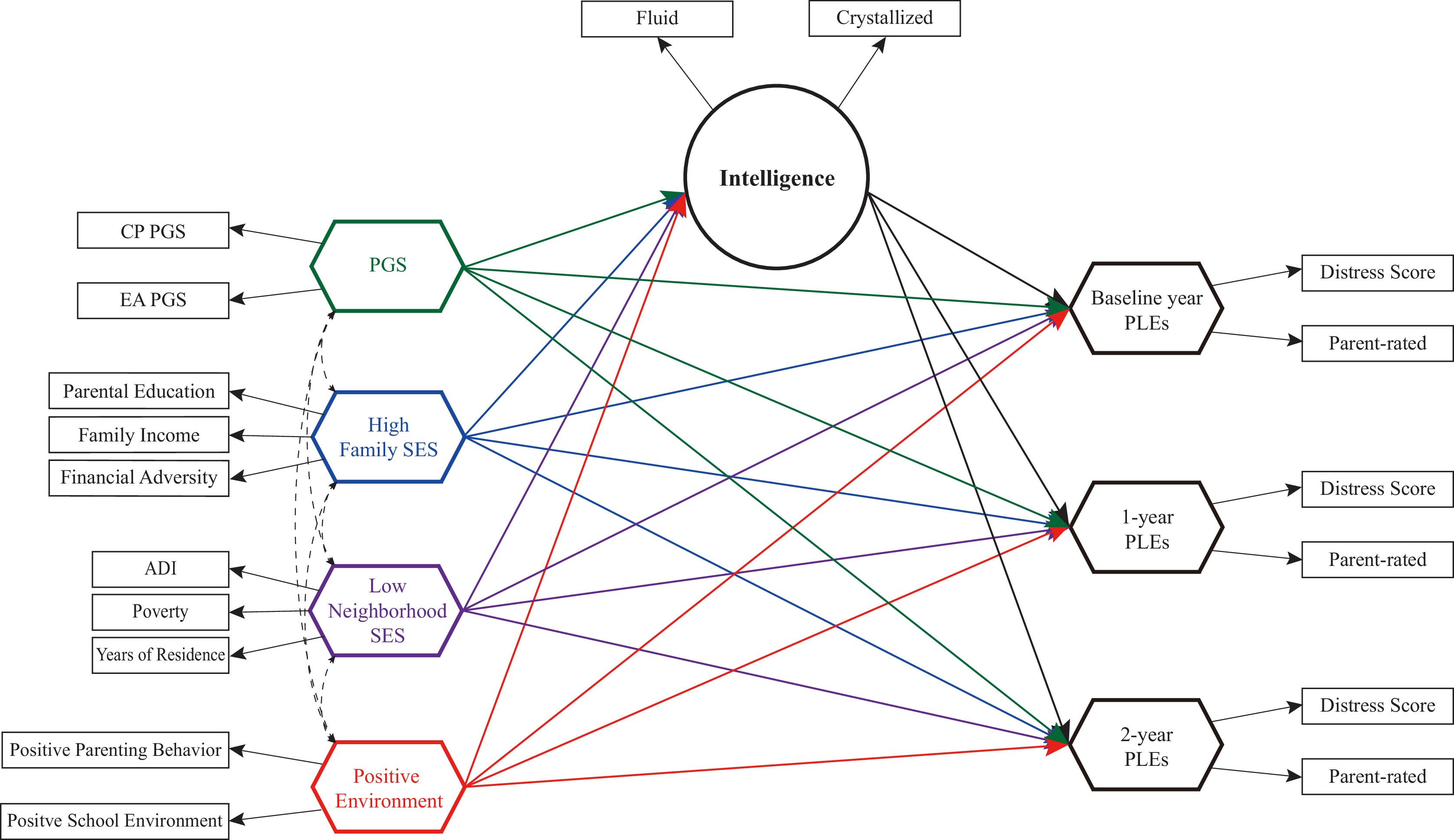
Study diagram for longitudinal trajectories of genetic and environmental influences on psychotic-like experiences (PLEs) through cognitive intelligence.
This study examines the mediating role of cognitive intelligence within the effects of cognitive phenotype polygenic scores (PGSs), high family socioeconomic status (SES), low neighborhood SES, and positive family and school environments on PLEs observed at baseline, 1-year follow-up, and 2-year follow-up in children aged 9–10 years. Both direct and indirect effects, as well as total effects, were evaluated for statistical significance.
Version of record, version 2 (12 August 2024) · Figure source · CC BY 4.0
Figure 2
Caption & source
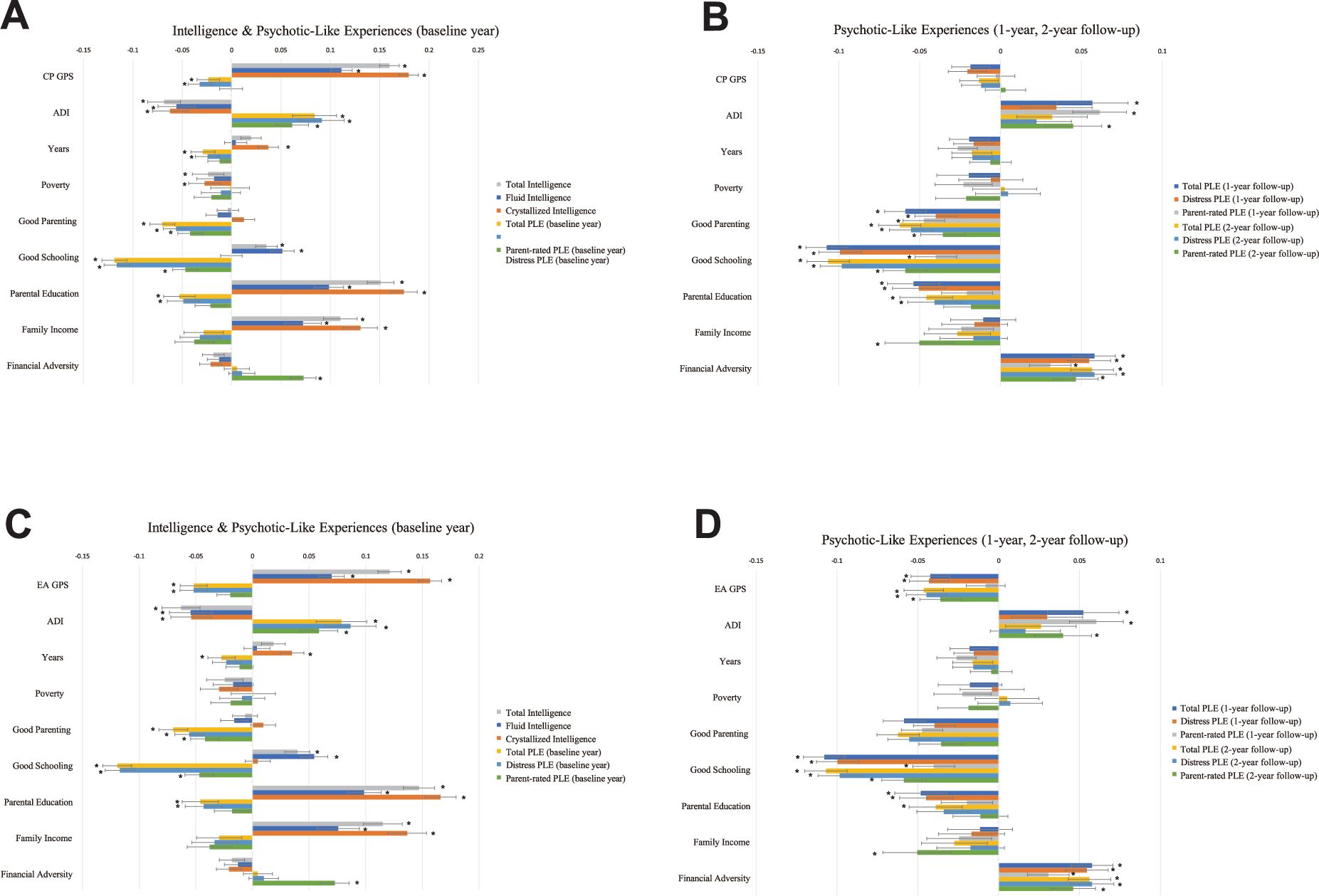
Linear models testing genetic, socioeconomic, and environmental factors associated with cognitive intelligence and PLEs.
Standardized coefficients of a linear mixed model with CP PGS (A, B) and EA PGS (C, D). The analyses included 6602 samples of multiethnicity. Cognitive intelligence and PLEs correlated with the PGSs, residential disadvantage, positive environment, and family SES in the opposite directions. Error bars indicate 95% bootstrapped confidence intervals with 5000 iterations. CP and EA denote cognitive performance and education attainment, respectively; PGS, polygenic scores; SES, socioeconomic status; PLEs, psychotic-like experiences; ADI, Area Deprivation Index; Poverty, percentage of individuals below −125% of the poverty level; Years, years of residence (*p-FDR <0.05).
Version of record, version 2 (12 August 2024) · Figure source · CC BY 4.0
Figure 3
Caption & source
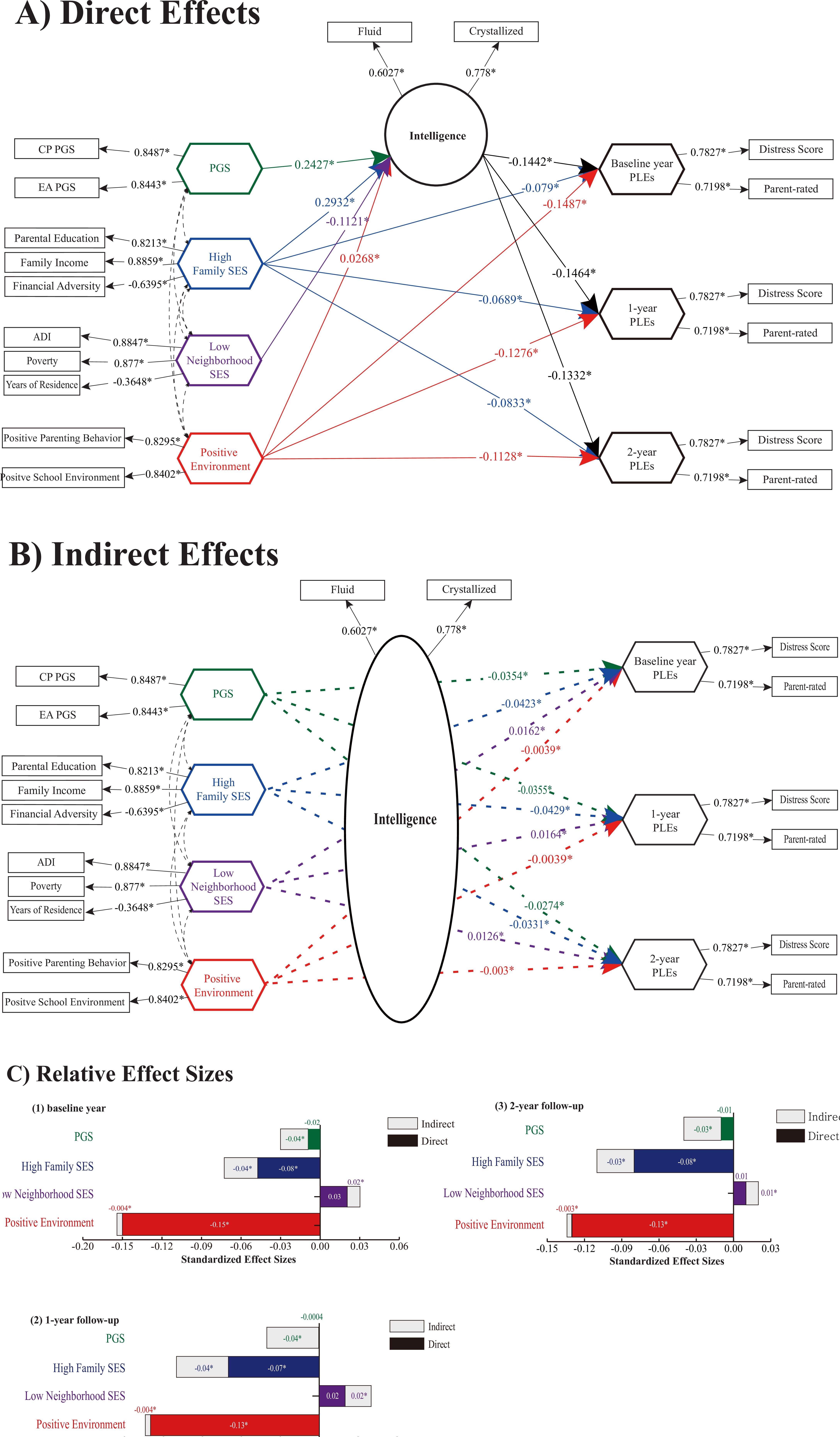
Direct/indirect effects of gene–environment factors to cognitive and PLEs outcomes.
(A) Direct pathways from PGS, high family SES, low neighborhood SES, and positive environment to cognitive intelligence and PLEs. Standardized path coefficients are indicated on each path as direct effect estimates (significance level *p < 0.05). (B) Indirect pathways to PLEs via intelligence were significant for polygenic scores, high family SES, low neighborhood SES, and positive environment, indicating the significant mediating role of intelligence. (C) Relative effect sizes of direct and indirect pathways within the total effects on PLEs. The standardized effect sizes of direct pathways are colored within each bar. In (A–B), child sex, genetic ancestry, body mass index (BMI), marital status, family history of psychiatric disorders, and ABCD research sites were included as covariates. CP PGS and EA PGS denote polygenic scores of cognitive performance and education attainment, respectively; SES, socioeconomic status; PLEs, psychotic-like experiences; Crystallized and Fluid, crystallized and fluid intelligence; ADI, Area Deprivation Index; Poverty, percentage of individuals below −125% of the poverty level; Years, years of residence. Note: * indicates a statistically significant parameter estimate at α = 0.05.
Version of record, version 2 (12 August 2024) · Figure source · CC BY 4.0
Appendix 3—figure 1
Caption & source
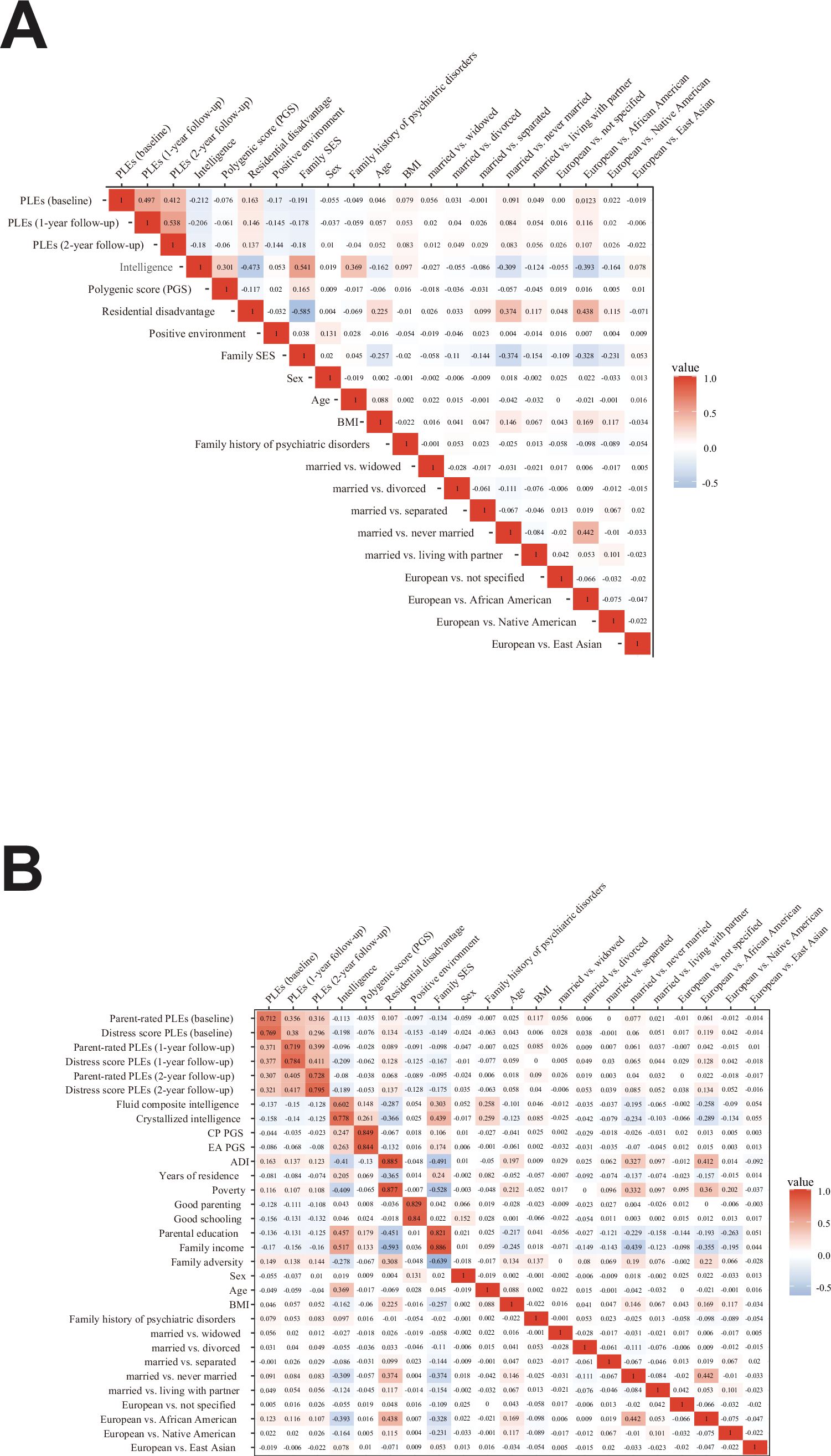
Component correlation matrix of integrated generalized structured component analysis (IGSCA).
(A) Correlation between all component/factor variables of the IGSCA model. (B) Correlation between all observed variables used to construct the relevant component/factor variables in the IGSCA model. CP PGS and EA PGS denote polygenic scores of cognitive performance and education attainment, respectively; PLEs, psychotic-like experiences; Crystallized and Fluid, crystallized and fluid intelligence; ADI, Area Deprivation Index; Poverty, percentage of individuals below −125% of the poverty level; Years, years of residence.
Version of record, version 2 (12 August 2024) · Figure source · CC BY 4.0
Versions & resources
Peer-reviewed journal article
eLife · 2024
DOI: 10.7554/eLife.88117eLife reviewed preprint, version 2
Posted 2023-09-06
eLife reviewed preprint, version 3
Posted 2023-11-13
Cite this work
Park, J., Lee, E., Cho, G., Hwang, H., Kim, B.-G., Kim, G., Joo, Y. Y., & Cha, J. (2024). Gene–environment pathways to cognitive intelligence and psychotic-like experiences in children. eLife, 12, RP88117. https://doi.org/10.7554/eLife.88117