
2021 · PLOS One · 16(3), e0247592
Journal DOI: 10.1371/journal.pone.0247592 Open access
Abstract
With advances in neuroimaging and genetics, imaging genetics is a naturally emerging field that combines genetic and neuroimaging data with behavioral or cognitive outcomes to examine genetic influence on altered brain functions associated with behavioral or cognitive variation. We propose a statistical approach, termed imaging genetics generalized structured component analysis (IG-GSCA), which allows researchers to investigate such gene-brain-behavior/cognitive associations, taking into account well-documented biological characteristics (e.g., genetic pathways, gene-environment interactions, etc.) and methodological complexities (e.g., multicollinearity) in imaging genetic studies. We begin by describing the conceptual and technical underpinnings of IG-GSCA. We then apply the approach for investigating how nine depression-related genes and their interactions with an environmental variable (experience of potentially traumatic events) influence the thickness variations of 53 brain regions, which in turn affect depression severity in a sample of Korean participants. Our analysis shows that a dopamine receptor gene and an interaction between a serotonin transporter gene and the environment variable have statistically significant effects on a few brain regions’ variations that have statistically significant negative impacts on depression severity. These relationships are largely supported by previous studies. We also conduct a simulation study to safeguard whether IG-GSCA can recover parameters as expected in a similar situation.
Version of record · Abstract source · CC BY 4.0
Figures 3 images
Select an image to view it at full size. Captions identify the source and version.
Figure 1
Caption & source
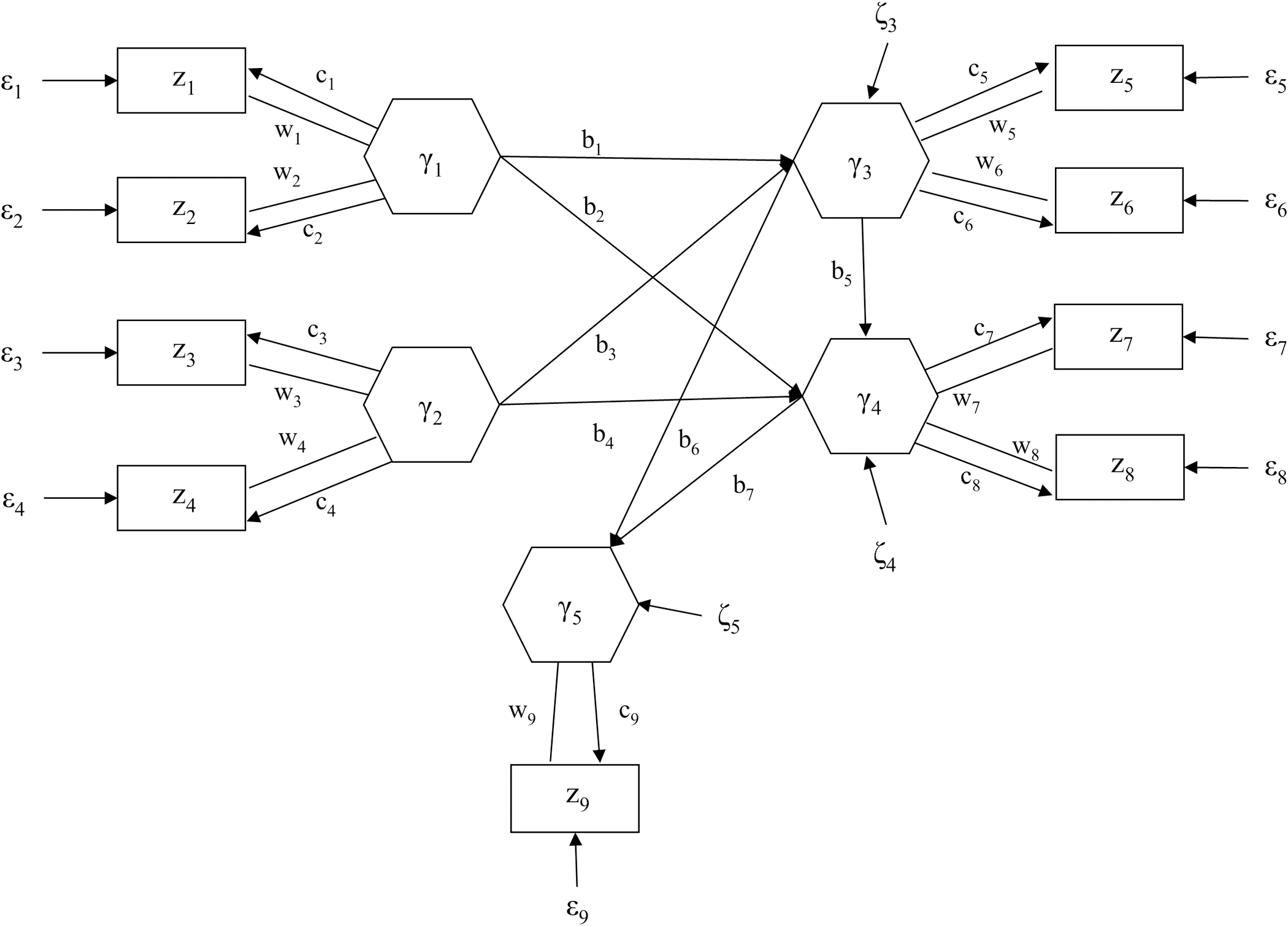
A path diagram of a prototype IG-GSCA model.
Version of record · Figure source · CC BY 4.0
Figure 2
Caption & source
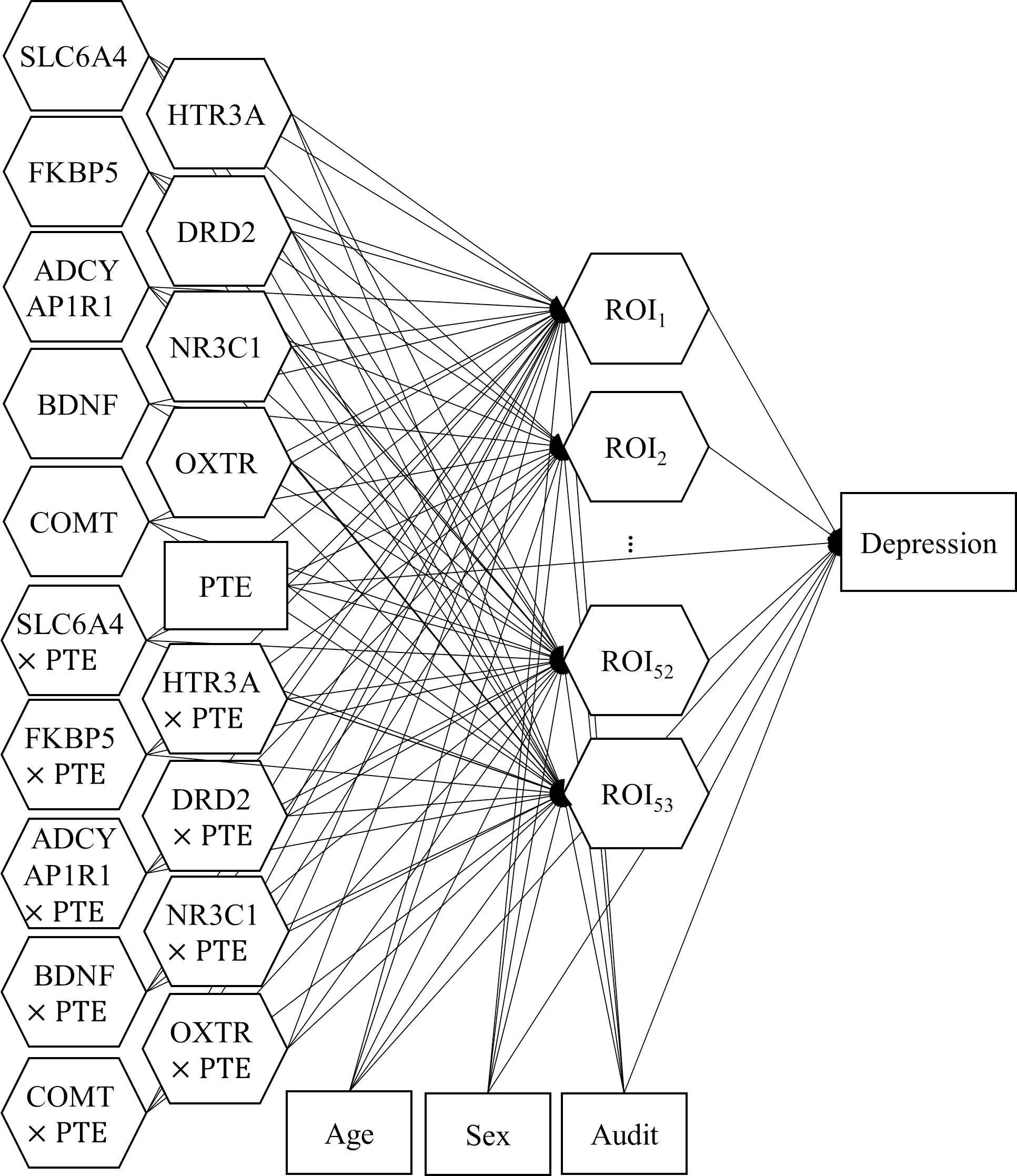
The structural model specified for the gene-brain-depression data.
All weights and residual terms are omitted to make the figure concise.
Version of record · Figure source · CC BY 4.0
Figure 3
Caption & source
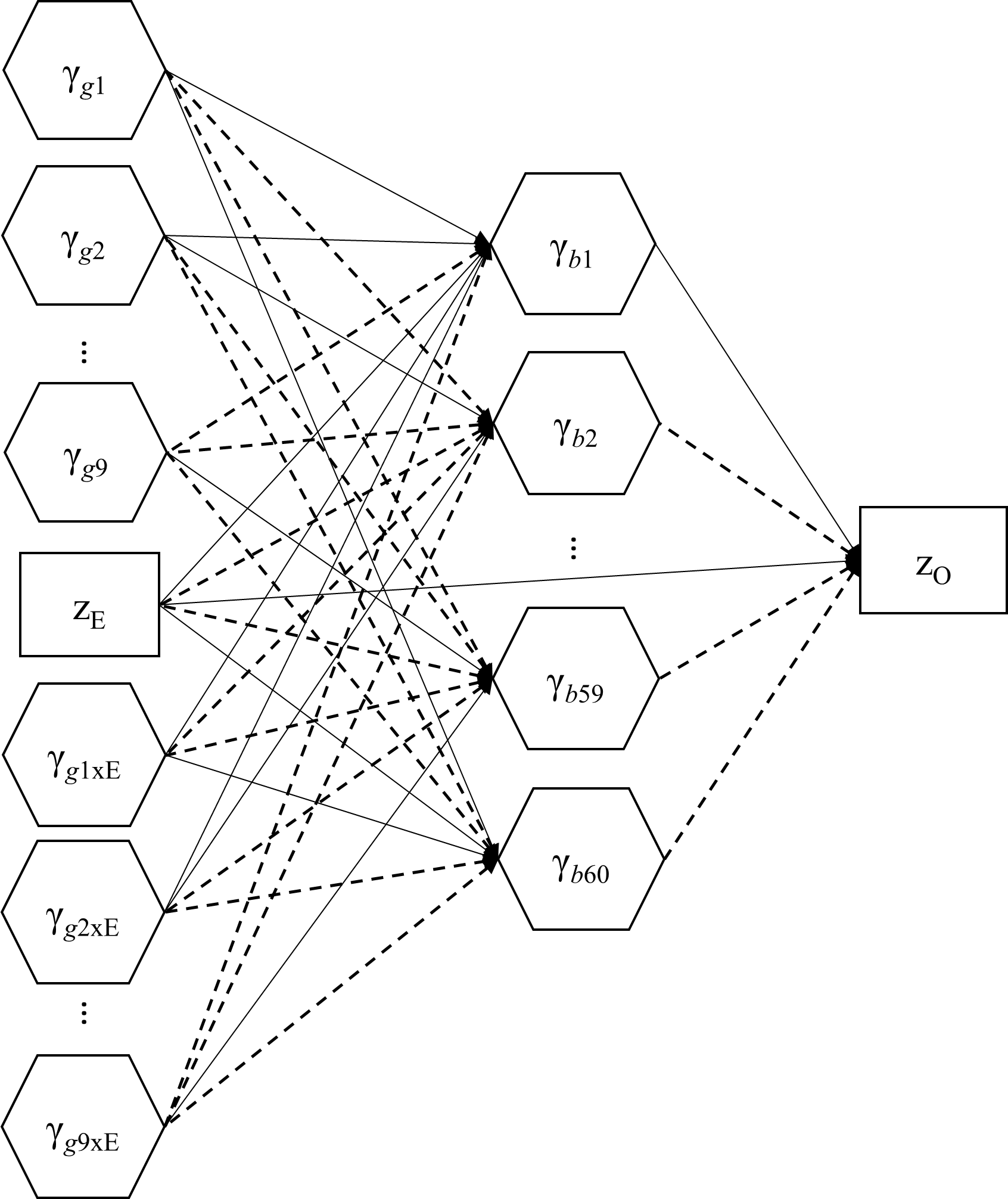
The structural model specified for the simulations study.
All weights and residual terms are omitted. A non-zero path coefficient is denoted by an arrow, whereas a zero path coefficient is by a dashed arrow.
Version of record · Figure source · CC BY 4.0
Versions & resources
Peer-reviewed journal article
PLOS One · 2021
DOI: 10.1371/journal.pone.0247592Cite this work
Hwang, H., Cho, G., Jin, M. J., Ryoo, J. H., Choi, Y., & Lee, S.-H. (2021). A knowledge-based multivariate statistical method for examining gene-brain-behavioral/cognitive relationships: Imaging genetics generalized structured component analysis. PLOS One, 16(3), e0247592. https://doi.org/10.1371/journal.pone.0247592