
2025 · Frontiers in Psychiatry · 16, 1613322
Author’s introduction (LinkedIn)
Journal DOI: 10.3389/fpsyt.2025.1613322 Open access
Abstract
Objective
The changes in brain structures affected by potentially traumatic events (PTEs) and polymorphisms of various genes are associated with posttraumatic stress disorder (PTSD). Our study investigated the pathophysiology of PTSD along with PTEs, genes, and brain regions of interest (ROIs) via imaging genetics generalized structured component analysis (IG-GSCA).
Methods
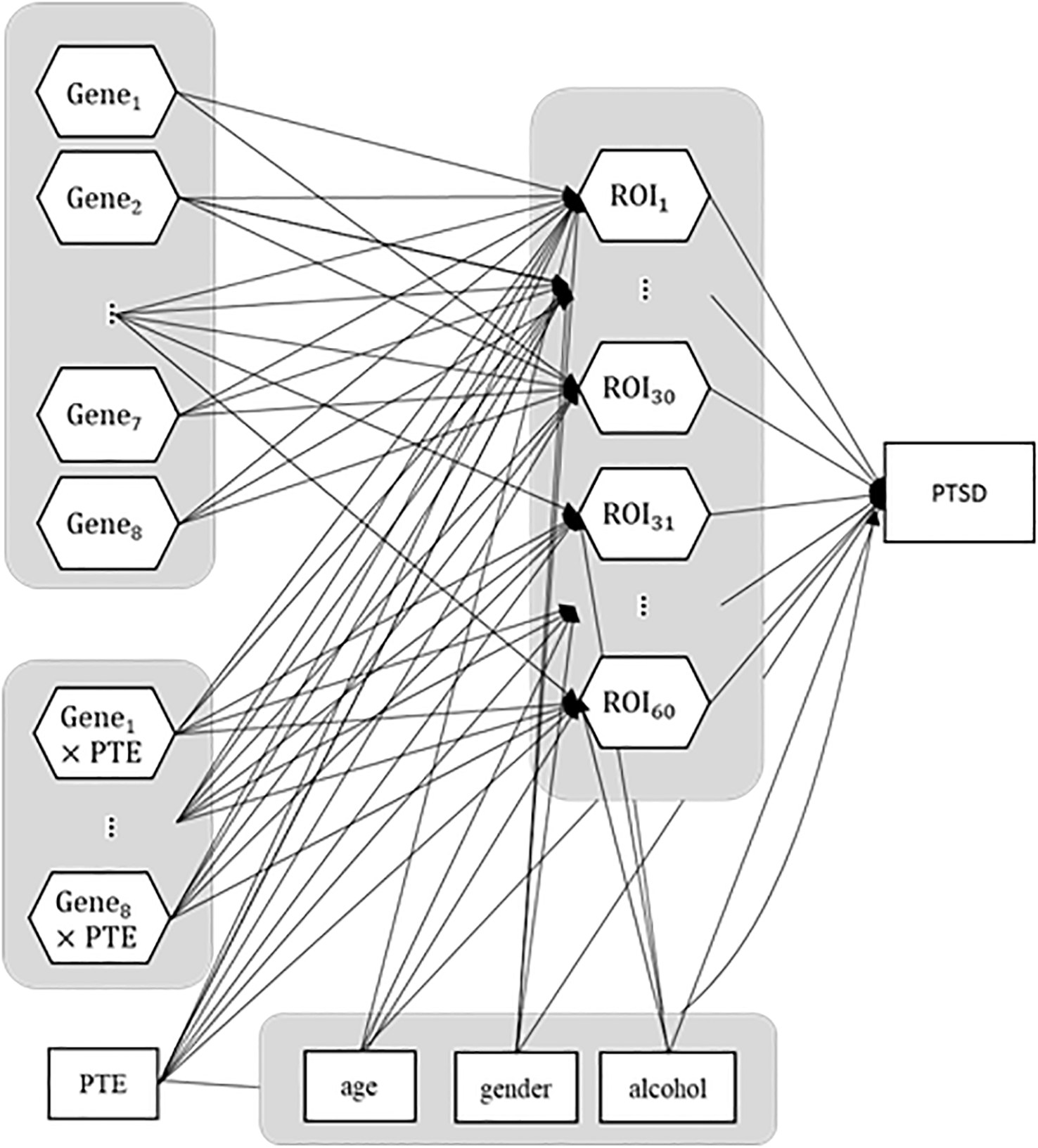
A total of 231 participants (137 healthy volunteers and 94 PTSD patients) were enrolled. We performed T1-weighted structural magnetic resonance imaging, genotyping for nine genes (SLC6A4, FKBP5, ADCYAP1R1, BDNF, COMT, HTR3A, DRD2, NR3C1, and OXTR), and psychological assessments measuring PTEs, PTSD symptoms, and alcohol problems. Genes, PTEs, and their interactions were set as predictors for volumes of 60 brain ROIs, and volumes of the 60 ROIs were set as predictors for the PTSD severity, implying that volumes of brain ROIs were set to mediate the effects of genes and PTEs on the PTSD severity.
Results
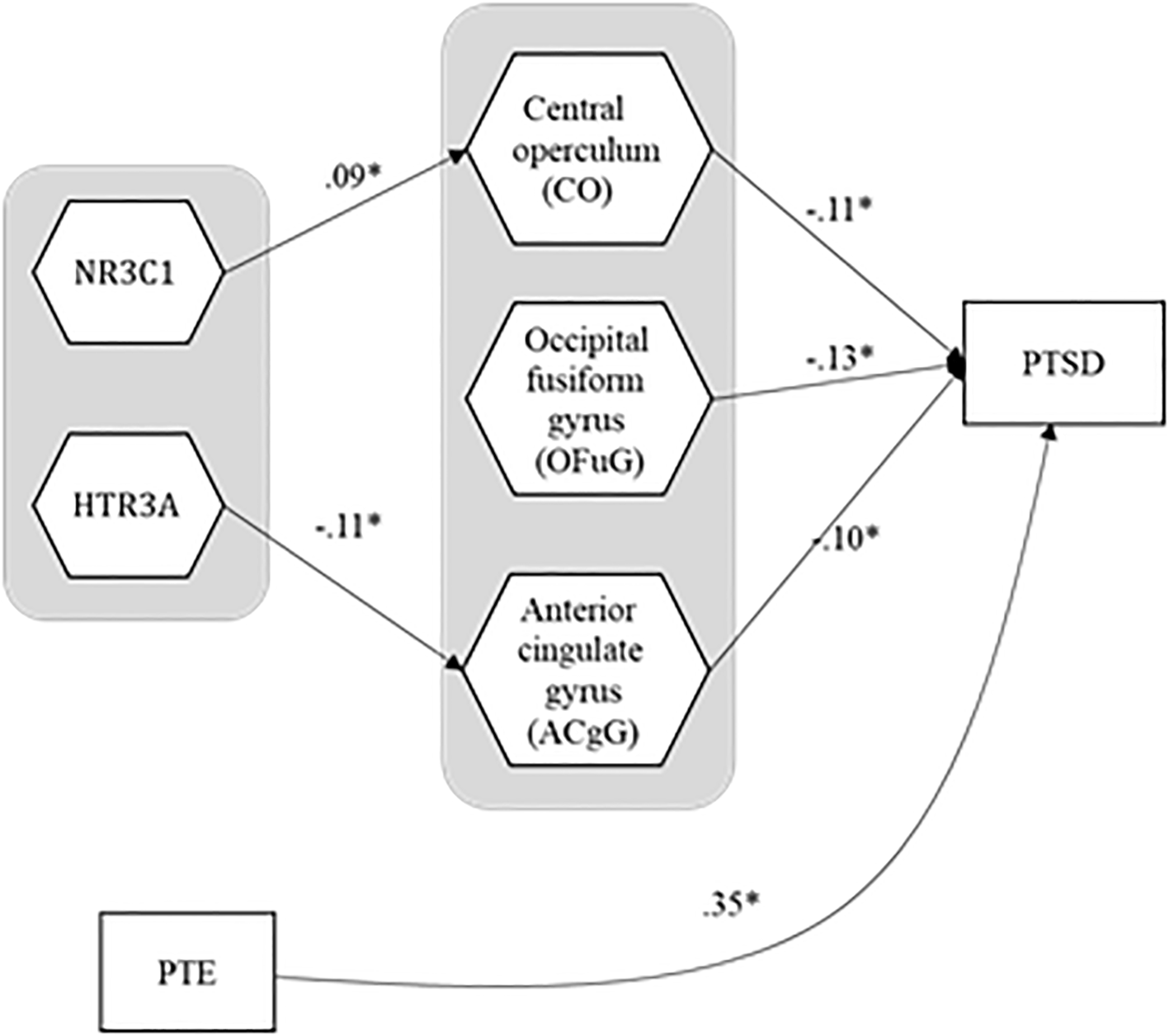
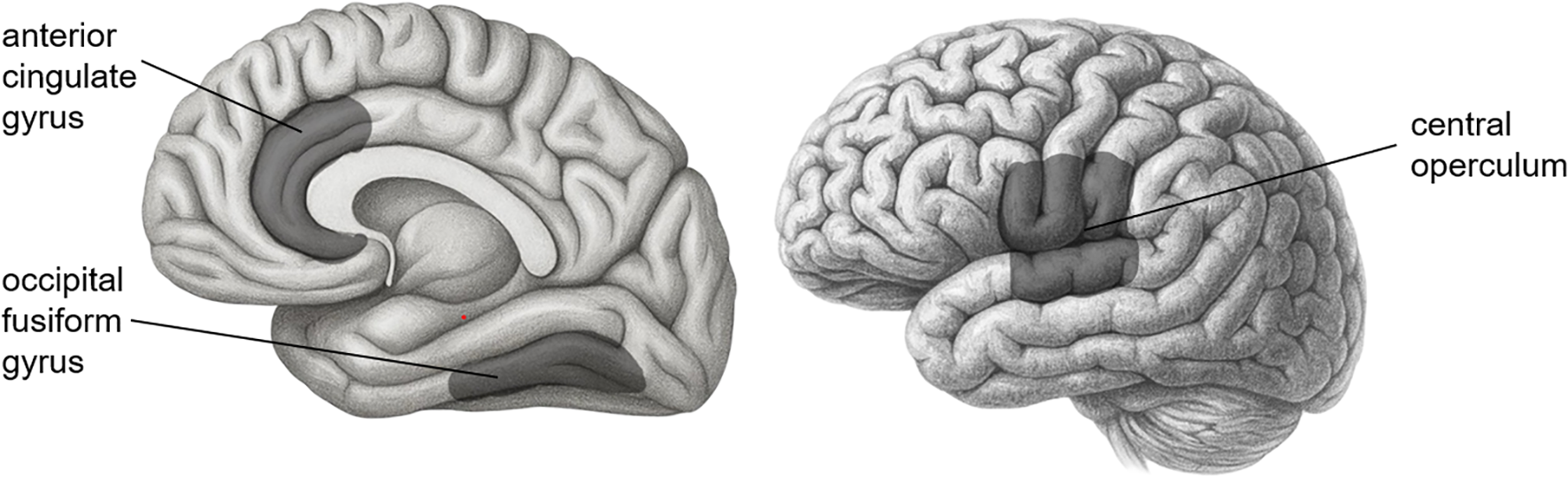
Our results suggested that HTR3A was related to the volume of the anterior cingulate gyrus and NR3C1 was related to the volume of the central operculum. Also, volumes of the central operculum, occipital fusiform gyrus, and anterior cingulate gyrus were negatively associated with the severity of PTSD, while PTEs were positively associated with PTSD severity.
Conclusions
This study is one of the few that examined the relationships between various factors related to PTSD symptom severity, including genetics, environment, gene-environment interactions, and brain regions of interest (ROIs), all within a single model. The findings indicated mediating pathways from the HTR3A gene polymorphism to PTSD symptom severity through the volume of the anterior cingulate gyrus, and from the NR3C1 gene polymorphism to PTSD symptom severity via the volume of the central operculum. However, only the indirect effect involving NR3C1 was statistically significant. Additionally, the study found a significant association between the occipital fusiform gyrus and PTSD symptom severity.
Version of record · Abstract source · CC BY 4.0
Figures 3 images
Select an image to view it at full size. Captions identify the source and version.
Figure 1
Caption & source
Hypothesized model specification. Hexagons represent constructs, whereas squares are observed variables. PTE, potentially traumatic event; ROI, regions of interest; PTSD, posttraumatic stress disorder.
Version of record · Figure source · CC BY 4.0
Figure 2
Caption & source
The estimates for the path coefficients that form statistically significant linkages from genes and PTE to ROIs to PTSD symptom severity. PTE, potentially traumatic event; PTSD, posttraumatic stress disorder.
Version of record · Figure source · CC BY 4.0
Figure 3
Caption & source
Three brain areas significantly mediated between genes and PTSD symptom severity.
Version of record · Figure source · CC BY 4.0
Versions & resources
Peer-reviewed journal article
Frontiers in Psychiatry · 2025
DOI: 10.3389/fpsyt.2025.1613322Cite this work
Jin, M. J., Cho, G., Jeon, H., Choi, Y., Hwang, H., & Lee, S.-H. (2025). Influence of genetic polymorphism and trauma on cortical structures and PTSD severity: Imaging genetics generalized structured component analysis. Frontiers in Psychiatry, 16, 1613322. https://doi.org/10.3389/fpsyt.2025.1613322